Manila Family Visas: VAC and Embassy Appointments
Organize a Manila family B1/B2 application with individual DS-160 checks, separate VAC and embassy appointments, and a shared-trip planning sheet.
This rewritten edition replaces an earlier article first published on Aug 2, 2026. The sources and content below belong to this edition.
A family preparing visitor visa interviews in Manila needs to track each person's application and both appointment stages. The U.S. Embassy in the Philippines directs applicants through a Visa Application Center appointment for photographs and fingerprints, followed by the visa interview at the embassy. Sharing a holiday plan does not combine the family's DS-160 forms into one application.
This guide combines official references with original communication exercises. Example answers are illustrations, not a script to copy or a report of a real applicant. USA Vizo is independent and does not assess eligibility or predict decisions.
Put both appointments on the family calendar
The tourism and business section of the U.S. Embassy's visa page describes the two appointments and links to the Philippines scheduling instructions. Use that route for the current procedure. For an application requiring an interview, distinguish the VAC visit from the embassy interview when checking confirmations and planning transport.
Write down the location, date and time shown for each appointment. Check every family member's records even if one person made the bookings. A calendar entry labeled “visa appointment” can hide a missing second appointment or the wrong address. If a family member's confirmation differs from the others, resolve that difference through the official scheduling service.
A shared travel plan does not guarantee that everyone will be interviewed together or at the same window. Follow the booking confirmations and staff instructions on the day. Applicants using a renewal or interview-waiver route should follow the instructions for that route instead of assuming this two-visit plan applies to them.
Give each person their own DS-160 check
The State Department's DS-160 family application guidance allows certain information to be copied into a new application, but each family member still needs an individual application. Review copied details before submitting. A destination may be shared; employment, previous travel and personal history may differ.
Keep a separate confirmation page for each applicant. Check the name and application ID against the correct person's records, then follow the scheduling service's instructions for associating that DS-160 with the appointment. If you find an error after submission, check the post's correction instructions before creating or substituting another form.
One family member can help organize the paperwork. Each adult should still know what their own application says. Set aside time for them to read it without someone answering every question on their behalf.
Use one planning sheet with a row per applicant
The following is a suggested organization tool, not an embassy form. Keep sensitive identifiers in your own secure records. You can use initials on a shared household calendar and store the full confirmations separately.
| Check for each applicant | Record privately | Resolve before attending |
|---|---|---|
| Application | Own DS-160 confirmation and passport details | A copied name, travel history or employment detail that is wrong |
| VAC visit | Confirmed date, time and location | A missing confirmation or mistaken address |
| Embassy interview | Confirmed date, time and location | A booking that differs from the assumed family schedule |
| Trip arrangements | Purpose, intended stay and personal cost share | A disagreement about who pays for flights or accommodation |
For children or anyone who needs assistance, check the current local attendance, accompaniment and accommodation instructions. Adult relatives traveling together should not infer a child's attendance requirements from their own appointments.
Practice a shared trip with individual answers
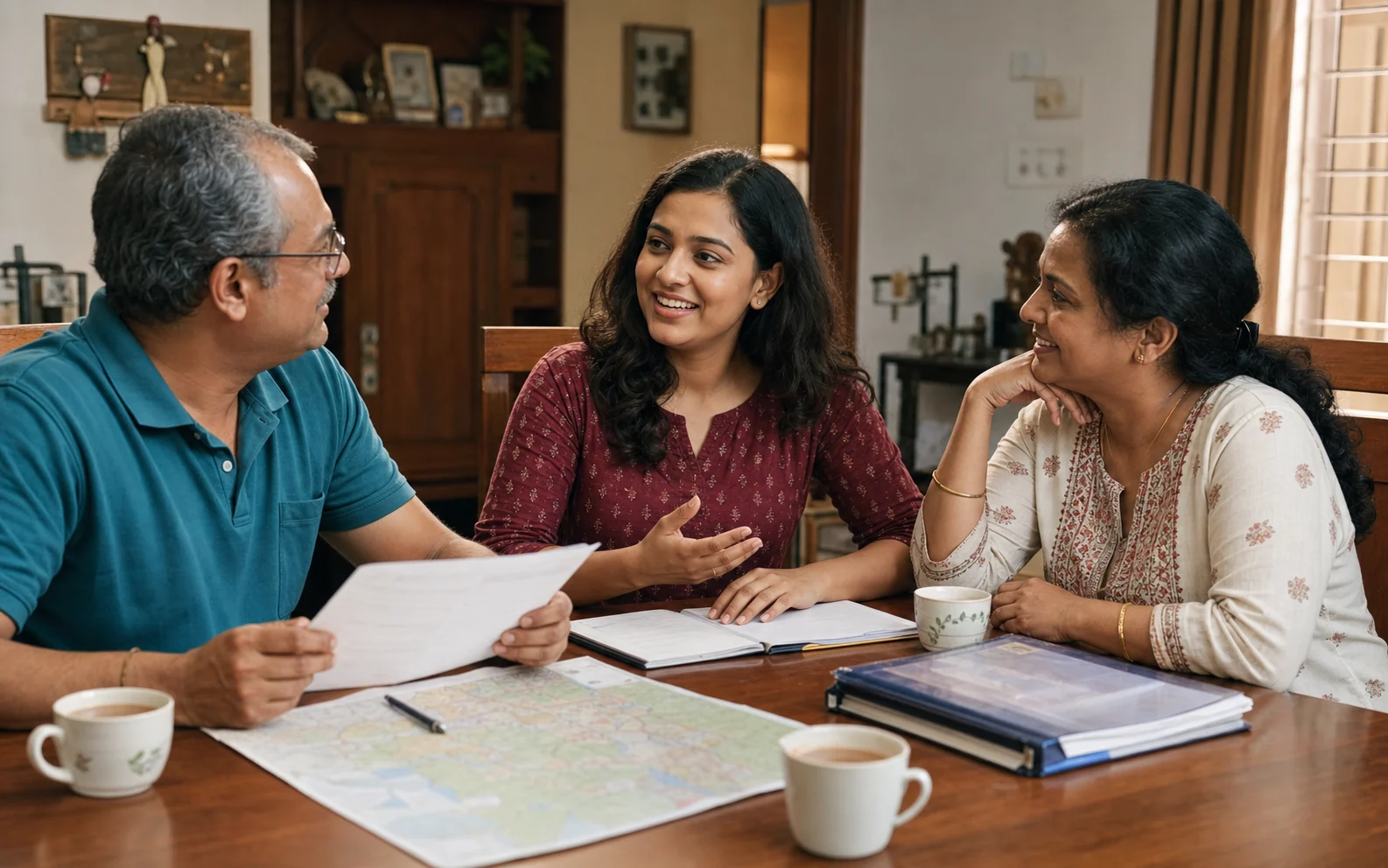
Consider this original fictional exercise: two parents and their adult daughter plan to visit a relative and take a short holiday. The parents will pay their own flights; the daughter will pay hers. Their relative offers a place to stay for the first part of the visit, and the travelers will share the hotel cost for a later stop.
Ask each adult, separately, to explain the purpose of the visit and who pays for their part. The daughter should describe her own work and intended leave. A retired parent should describe their own circumstances. There is no need to make all three answers identical or to invent employment for someone who is retired.
Then ask a question that follows from the answer. If someone says “we will stay with family,” ask where they will stay during the later stop. If someone says “my parents pay,” ask which expenses they mean. Use the exercise to find an unclear arrangement, then discuss it together.
Separate the host's help from each applicant's circumstances
The visitor visa guidance says another person may cover some or all travel costs. It also explains that applicants qualify through their own circumstances and ties abroad. An invitation from a U.S. relative does not establish eligibility.
In the exercise, free accommodation for the first stop leaves flights, the later hotel and daily expenses to explain. Record those arrangements clearly. If the family has not agreed who covers the later hotel, settle that practical question before using “our host pays for the trip” in an answer.
Check the actual confirmations before leaving home
Read the current entry and document instructions for the appointment you are about to attend. Prepare each person's required documents and check transport to the stated location. Keep the VAC and embassy confirmations distinguishable so that a relative helping with transport can see which journey is scheduled.
This guide assumes the Philippines is an appropriate place for the family to apply. The State Department's nationality or residence guidance applies when choosing an interview location. If family members have different nationalities or countries of residence, check their situations individually before paying fees or planning a joint trip to Manila.
Sources
Official requirements and procedures can change. Consult the linked sources and the instructions for your embassy or consulate before acting.